
What President Obama really said in that ’60 Minutes’ interview about Benghazi

by Bret Baier / November 05, 2012 / Fox News

ANALYSIS: Two days before the election, CBS posted additional portions of a Sept. 12 “60 Minutes” interview where President Obama seems to contradict himself on the Benghazi attack. As the Benghazi investigation gets more attention and focus, CBS is once again adding to the Benghazi timeline.

In the interview, according to the latest portions, Obama would not say whether he thought the attack was terrorism. Yet he would later emphasize at a presidential debate that in the Rose Garden the same day, he had declared the attack an act of terror.

That moment was one of the most intense exchanges in the second presidential debate.  Romney was on the offensive on what conservatives believed was a serious vulnerability of Obama — the handling of the Benghazi attack and what he called it from the beginning.

The town hall questioner asked, “Who was it that denied enhanced security and why?”

Obama did not provide a direct answer, but said: “When I say that we are going to find out exactly what happened, everybody will be held accountable, and I am ultimately responsible for what’s taking place there, because these are my folks, and I’m the one who has to greet those coffins when they come home, you know that I mean what I say.”
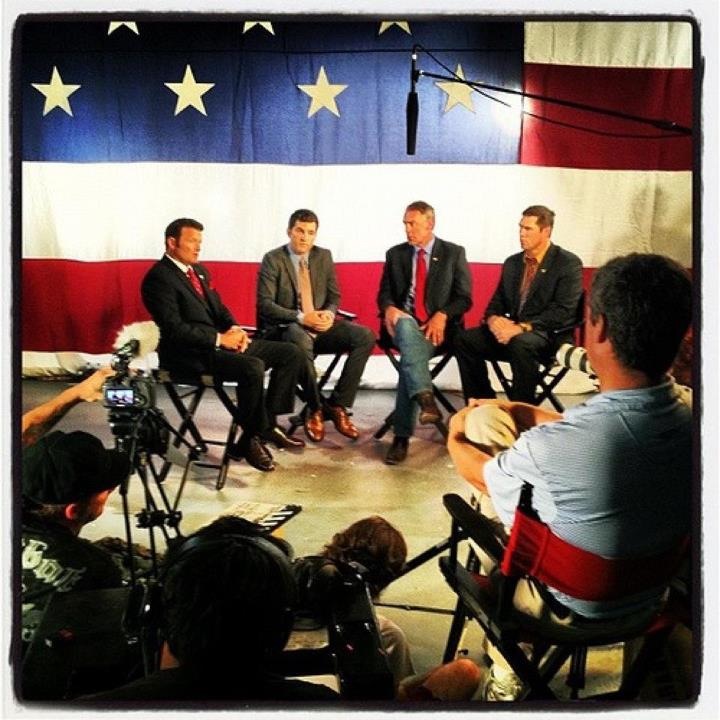
Click here to continue reading the full article…

What President Obama really said in that ’60 Minutes’ interview about Benghazi

by Bret Baier / November 05, 2012 / Fox News

ANALYSIS: Two days before the election, CBS posted additional portions of a Sept. 12 “60 Minutes” interview where President Obama seems to contradict himself on the Benghazi attack. As the Benghazi investigation gets more attention and focus, CBS is once again adding to the Benghazi timeline.

In the interview, according to the latest portions, Obama would not say whether he thought the attack was terrorism. Yet he would later emphasize at a presidential debate that in the Rose Garden the same day, he had declared the attack an act of terror.

That moment was one of the most intense exchanges in the second presidential debate.  Romney was on the offensive on what conservatives believed was a serious vulnerability of Obama — the handling of the Benghazi attack and what he called it from the beginning.

The town hall questioner asked, “Who was it that denied enhanced security and why?”

Obama did not provide a direct answer, but said: “When I say that we are going to find out exactly what happened, everybody will be held accountable, and I am ultimately responsible for what’s taking place there, because these are my folks, and I’m the one who has to greet those coffins when they come home, you know that I mean what I say.”

Romney pounced, saying, “There were many days that passed before we knew whether this was a spontaneous demonstration or actually whether it was a terrorist attack. And there was no demonstration involved. It was a terrorist attack, and it took a long time for that to be told to the American people.”

On rebuttal, Obama seemed rehearsed, but indignant. “The day after the attack, Governor, I stood in the Rose Garden, and I told the American people and the world that we are going to find out exactly what happened, that this was an act of terror… And the suggestion that anybody in my team, whether the secretary of state, our U.N. ambassador, anybody on my team would play politics or mislead when we’ve lost four of our own, Governor, is offensive. That’s not what we do. That’s not what I do as president. That’s not what I do as commander in chief.”

Governor Romney walked forward and started questioning …

ROMNEY: You said in the Rose Garden the day after the attack it was an act of terror. It was not a spontaneous demonstration.

OBAMA: Please proceed.

ROMNEY: Is that what you’re saying?

OBAMA: Please proceed, Governor.

ROMNEY: I want to make sure we get that for the record, because it took the president 14 days before he called the attack in Benghazi an act of terror.

OBAMA: Get the transcript.

CROWLEY: It — he did in fact, sir. So let me — let me call it an act of terrorism — (inaudible) –

OBAMA: Can you say that a little louder, Candy? (Laughter, applause.)

CROWLEY: He did call it an act of terror. It did as well take — it did as well take two weeks or so for the whole idea of there being a riot out there about this tape to come out. You are correct about that.

ROMNEY: This — the administration — the administration — (applause) — indicated that this was a — a reaction to a — to a video and was a spontaneous reaction.

CROWLEY: They did.

ROMNEY: It took them a long time to say this was a terrorist act by a terrorist group and — and to suggest — am I incorrect in that regard? On Sunday the — your — your secretary or –

Obama — who had clearly won the moment (largely thanks to Candy Crowley) — clearly wanted to move on from that victorious moment — and quickly.

OBAMA: Candy –

ROMNEY: Excuse me. The ambassador to the United Nations went on the Sunday television shows and — and spoke about how this was a spontaneous reaction.

OBAMA: Candy, I’m — I’m happy to –

CROWLEY: President, let me — I –

OBAMA: I’m happy to have a longer conversation about foreign policy.

CROWLEY: I know you — absolutely. But I want — I want to move you on.

OBAMA: OK, I’m happy to do that too.

CROWLEY: And also, people can go to the transcripts and –

OBAMA:I just want to make sure that –

CROWLEY: — figure out what was said and when.

OBAMA:– you know, all these wonderful folks are going to have a chance to get some — their questions answered.

Now, we may know why.  Soon after that debate exchange, CBS released a previously unseen clip of an interview “60 Minutes‘” Steve Kroft did with Obama on Sept. 12 — the day after the Benghazi attack.

The clip added to the previous sound that had been released and seemed to back up the president’s claim that he was referring to the Benghazi attack as a terrorist act in the Rose Garden on Sept. 12. Here’s what CBS put out Oct. 19, five weeks after the attack.

KROFT: But there are reports that they were very heavily armed with grenades, that doesn’t sound like your normal demonstration.

OBAMA:  As I said, we’re still investigating exactly what happened, I don’t want to jump the gun on this.   But your right that this is not a situation that was exactly the same as what happened in Egypt.   And my suspicion is there are folks involved in this. Who were looking to target Americans from the start.  So we’re gonna make sure that our first priority is to get our folks out safe, make sure our embassies are secured around the world and then we are going to go after those folks who carried this out.”

After the second debate back and forth, this seemed to back up the president’s stance. The only problem? Kroft started his question with “but.”

I always thought, it seems that he’s following up on a question — I wonder if there was a question before that question?

This week, we got the CIA timeline of events in which they detail all of the response of the CIA and what they put up the chain of command in the minutes and hours after the attack began.  Of all the details of the specific times the CIA contractors respond to the fight, I found this one most interesting:

“1:15 a.m.: CIA reinforcements arrive on a 45-minute flight from Tripoli in a plane they’ve hastily chartered. The Tripoli team includes four GRS security officers, a CIA case officer and two U.S. military personnel who are on loan to the agency. They don’t leave Benghazi airport until 4:30. The delay is caused by negotiations with Libyan authorities over permission to leave the airport, obtaining vehicles, and the need to frame a clear mission plan. The first idea is to go to a Benghazi hospital to recover Stevens, who they correctly suspect is already dead. But the hospital is surrounded by the Al Qaeda-linked Ansar al-Shariah militia that mounted the consulate attack.”

So the U.S. Ambassador to Libya is at the Benghazi hospital and suspected dead. The CIA contractors know that, but they can’t get there because the hospital is surrounded by the Al Qaeda-linked group Ansar al Shariah, the “militia that mounted the consulate attack.”

This goes up the chain communication at 1:15 a.m. on Sept. 12.  The White House, the Situation Room, and all of those paying attention to intel channels know that the guys on the ground have determined the group that’s behind this. It’s the Al Qaeda-linked militia that are still fighting and have the hospital surrounded.

About 12 hours later — before heading to Las Vegas for a campaign event — Obama sits down for that “60 Minutes” interview with Steve Kroft.

And Sunday night, 54 days after the attack and almost two weeks after putting out the first additional clip that appeared to back up the president after the second debate, CBS without fanfare posted the rest of the Benghazi question online — the question before the question.

Remember this is from a president who has been saying he was calling Benghazi a terrorist attack from the very first moment in the Rose Garden. Also, remember what he said in the debate and notice the new part — underlined in bold.

Click here to see the “60 Minutes” interview. 

   KROFT: Mr. President, this morning you went out of your way to avoid the use of the word terrorism in connection with the Libya Attack, do you believe that this was a terrorism attack?

   OBAMA: Well it’s too early to tell exactly how this came about, what group was involved, but obviously it was an attack on Americans.  And we are going to be working with the Libyan government to make sure that we bring these folks to justice, one way or the other.  

KROFT: It’s been described as a mob action, but there are reports that they were very heavily armed with grenades, that doesn’t sound like your normal demonstration.

OBAMA:  As I said, we’re still investigating exactly what happened, I don’t want to jump the gun on this.   But your right that this is not a situation that was exactly the same as what happened in Egypt.  And my suspicion is there are folks involved in this. Who were looking to target Americans from the start.  So we’re gonna make sure that our first priority is to get our folks out safe, make sure our embassies are secured around the world and then we are going to go after those folks who carried this out.

KROFT: There have been reports, obviously this isn’t the first time…there have been attacks on the consulate before. There was an attack against the British ambassador. Do you…this occurred on Sept. 11. Can you tell me why the ambassador was in Benghazi yesterday? Was it to evaluate security at the consulate?

OBAMA: Well keep in mind Chris Stevens is somebody that was one of the first Americans on the ground when we were in the process of saving Benghazi and providing the opportunity for Libyans to create their own democracy. So this is somebody who had been courageous, had been on the ground, had helped to advise me and Secretary Clinton when we were taking our actions against Muammar Qaddafi. And is somebody who is very familiar with the train. He was doing the work that he does as a diplomat helping to shape our policies in the region at a time when things are still fairly fragile. But I think it’s important to note that we have a Libyan government in place that is fully cooperative, that sees the United States as a friend that recognizes we played an important role in liberating Libya and providing the Libyan people an opportunity to forge their own destiny. And in fact we had Libyans who helped protect our diplomats when they were under attack. But this is a country that is still rebuilding in the aftermath of Qaddafi. They don’t necessarily always have the same capabilities that countries with more established governments might have in helping to provide protection to our folks. But beyond that, what I want to do is make sure that we know exactly what happened, how it happened, who perpetrated this action, then we’ll act accordingly.”

These are two crucial answers in the big picture.  Right after getting out of the Rose Garden, where, according to the second debate and other accounts he definitively called the attack terrorism, Obama is asked point blank about not calling it terrorism. He blinks and does not push back.

Understand that this interview is just hours after he gets out of the Rose Garden.

How after this exchange and the CIA explanation of what was being put up the chain in the intel channels does the Ambassador to the United Nations go on the Sunday shows and say what she says about a spontaneous demonstration sparked by that anti-Islam video? And how does the president deliver a speech to the United Nations 13 days later where he references that anti-Islam video six times when referring to the attack in Benghazi?

There are many questions, and here are a few more.

Why did CBS release a clip that appeared to back up Obama’s claim in the second debate on Oct. 19, a few days before the foreign policy debate, and not release the rest of that interview at the beginning?

Why on the Sunday before the election, almost six weeks after the attack, at 6 p.m. does an obscure online timeline posted on CBS.com contain the additional “60 Minutes” interview material from Sept. 12?

Why wasn’t it news after the president said what he said in the second debate, knowing what they had in that “60 Minutes” tape — why didn’t they use it then? And why is it taking Fox News to spur other media organizations to take the Benghazi story seriously?

Whatever your politics, there are a lot of loose ends here, a lot of unanswered questions and a lot of strange political maneuvers that don’t add up.

That’s what reporters should live for, but this time they’re not.  We will.


Retired top military brass push for Romney

By Stephen Dinan / The Washington Times / November 4, 2012

Five hundred retired generals and admirals are running an ad in Monday’s editions of The Washington Times calling on the country to elect Republican Mitt Romney on Tuesday.

In plain terms the officers, who paid for the ad themselves, said they support Mr. Romney: “We, the undersigned, proudly support Governor Mitt Romney as our nation’s next president and commander-in-chief.”

The ad then goes on to list all of the officers, in alphabetical order, in four columns of print.

• Click here to view the ad (PDF)

The retired admirals and generals said they decided to take this public stand to try to head off “having to live through four more years of what has been experienced since January 20th, 2009.”

Click here to read the full article…

Retired top military brass push for Romney

By Stephen Dinan / The Washington Times / November 4, 2012

Five hundred retired generals and admirals are running an ad in Monday’s editions of The Washington Times calling on the country to elect Republican Mitt Romney on Tuesday.

In plain terms the officers, who paid for the ad themselves, said they support Mr. Romney: “We, the undersigned, proudly support Governor Mitt Romney as our nation’s next president and commander-in-chief.”

The ad then goes on to list all of the officers, in alphabetical order, in four columns of print.

• Click here to view the ad (PDF)

The retired admirals and generals said they decided to take this public stand to try to head off “having to live through four more years of what has been experienced since January 20th, 2009.”

The list contains a number of prominent four-star admirals and generals, including five former members of the Joint Chiefs of Staff.

Among those is the surprising appearance of retired Army Gen. Hugh Shelton, a former JCS chairman, appointed by President Bill Clinton.

In retirement, Gen. Shelton had aligned himself with Democrats, advising former Sen. John Edwards in his 2003-04 presidential run and endorsing Hillary Clinton in her 2008 presidential campaign.

Also on the list is retired Gen. James T. Conway, whom Mr. Obama inherited as the Marine Corps commandant, and retired Gen. Michael Dugan, former Air Force chief of staff.

Gen. Dugan was fired by then-defense Secretary Dick Cheney, in the George H.W. Bush administration, for talking too freely with reporters about the air war plan for Iraq in 1991 Desert Storm.

In October 1992, Gen. Dugan showed up on a list of 21 retired generals and admirals supporting Bill Clinton for president.

The Romney list contains a number of ex-fighter pilots, such as retired Air Force Gen. Chuck Horner, who ran the 1991 air war. The fighter community is greatly concerned about the aging fleet of warplanes, tankers and cargo jets, and the lack of money in the defense budget to fully modernize the force.

The most prominent Army general is Tommy Franks, who led U.S. Central Command and devised the plan for invading Iraq in 2003. His war plan was criticized for not planning for a robust Iraqi insurgency.


MCCAIN, GRAHAM, AYOTTE AND JOHNSON: Five unanswered questions about Benghazi attack

President Obama owes explanation to American people

By Sens. John McCain, Lindsey Graham and Kelly Ayotte and Ron Johnson / October 31, 2012 / Washington Times

Nearly two months after the murder of four American citizens in Benghazi, Libya, including U.S. Ambassador J. Christopher Stevens, there remain many more questions surrounding this tragedy than credible answers provided by the Obama administration. The American people want to know what happened on Sept. 11, 2012, and they deserve to hear an explanation directly from the president. Among the many questions that still need to be answered about the Benghazi attack, here are five of the most important ones.

Click here to read the full article…

MCCAIN, GRAHAM, AYOTTE AND JOHNSON: Five unanswered questions about Benghazi attack

President Obama owes explanation to American people

By Sens. John McCain, Lindsey Graham and Kelly Ayotte and Ron Johnson / October 31, 2012 / Washington Times

Nearly two months after the murder of four American citizens in Benghazi, Libya, including U.S. Ambassador J. Christopher Stevens, there remain many more questions surrounding this tragedy than credible answers provided by the Obama administration. The American people want to know what happened on Sept. 11, 2012, and they deserve to hear an explanation directly from the president. Among the many questions that still need to be answered about the Benghazi attack, here are five of the most important ones.

Why was security at the consulate so inadequate despite two previous attacks this year and the repeated pleas over many months from security agents on the ground and our ambassador for greater assistance?

On the anniversary of the attacks of Sept. 11, 2001, and after multiple attacks this year on our consulate and other Western interests in Benghazi, why were our forces in the region not ready and positioned to respond rapidly to this foreseeable emergency?

Why did President Obama and his administration spend nearly two weeks insisting that the Benghazi attack had been the result of a spontaneous protest to a hateful video, when all evidence clearly concluded that it was a planned terrorist attack by an al Qaeda affiliate?

At any point during the attack in Benghazi, did any member of the U.S. government, including senior administration officials, reject requests for greater military and intelligence assistance for our personnel on the ground in Benghazi? Did anyone order U.S. military and intelligence personnel in Benghazi or nearby in the region who offered help to stand down?

How can the president insist that “the tide of war is receding” when al Qaeda affiliates have grown stronger on his watch across the region, including Libya, Somalia, Yemen, Mali, Iraq and Syria — and when one of these al Qaeda-affiliated groups has killed a U.S. ambassador and three other Americans and driven us out of Benghazi?

Rather than providing straightforward answers to the American people on these and other questions, the administration has been playing a blame game ever since the attack occurred. First, officials sought to blame the attack on a spontaneous demonstration caused by a hateful video. When it was reported that no such demonstration had occurred and the attack clearly had been committed by terrorists affiliated with al Qaeda, the administration next sought to shift blame to the intelligence community. Now the administration is citing a lack of situational awareness in Benghazi as why no U.S. military personnel or assets were called in to respond to the attack, which lasted nearly seven hours.

Emails sent from our personnel on the ground in Benghazi within hours after the attack began clearly identified it as a sophisticated militant attack. There never should have been any debate over this point. The administration knew within hours after the assault on our consulate began that it was a terrorist attack. Though the attack occurred on the anniversary of the worst terrorist atrocity in our history, and though it was preceded by two earlier attacks on our consulate in Benghazi this year, the administration did not have adequate forces ready and in position in the region to respond to this foreseeable attack.

Regardless of what the president said in the Rose Garden on Sept. 12, the fact is that he and members of his administration refused to characterize the attack in Benghazi as an act of terrorism for as long as two weeks after the attack. The president himself spoke about the events in Benghazi at length in his speech to the U.N. General Assembly on Sept. 25 and never once characterized the attack as an act of terrorism. In press interviews around the same time, the president instead sought to blame the attack on a demonstration against the video.

Ultimately, the reason it is so important to learn all of the facts surrounding the attack in Benghazi is because there are larger national security issues at stake. The administration wants us to believe it has diminished the threats posed by terrorism — that “the tide of war is receding,” as Mr. Obama has said — and now we can focus on “nation-building at home.” The tragic events in Benghazi show how false and misleading the administration’s narrative is. The fact that it continues to act under this misguided assumption is only increasing the dangers we face around the world.

We do not need an administration-led investigation to answer the question of what the president knew, what he was told and what action he chose to take before, during and after the Benghazi attack. The American people deserve to know the facts about the attack in Benghazi, and the facts that have come to light thus far paint a disturbing picture the president needs to step forward and explain.

Obama’s perfect storms

Center for Security Policy / Oct 29, 2012 / By Frank Gaffney, Jr.
Barack Obama faces not one but two perfect storms.  He may actually be grateful for the meteorological one if it predictably helps obscure the political one at least for the next week.Hurricane Sandy is, of course, a disaster no one would welcome.  Untold numbers of Americans are having their lives endangered, or at least severely disrupted, and the potential economic harm is unimaginable at this point.

The president could nonetheless see a silver lining in this horrific “weather event.”  For one thing, he gets to posture as the leader of the nation in a terrible time of testing, the doler-out of federal emergency assistance and the great consoler around whom we instinctively rally in such circumstances.

Perhaps more importantly for Team Obama, many voters are going to have many other things on their minds for the next few, critical days instead of thinking about the evidence that their Commander-in-Chief was seriously derelict regarding the murderous attack in Benghazi.  The President’s reelection bid cannot afford in the closing days of a putatively very close election to have his fraudulent claim to successful stewardship of the national security portfolio be as exposed as his dismal economic record.

Click here to read the full article…

Obama’s perfect storms

Center for Security Policy | Oct 29, 2012 / By Frank Gaffney, Jr.

Barack Obama faces not one but two perfect storms.  He may actually be grateful for the meteorological one if it predictably helps obscure the political one at least for the next week.Hurricane Sandy is, of course, a disaster no one would welcome.  Untold numbers of Americans are having their lives endangered, or at least severely disrupted, and the potential economic harm is unimaginable at this point.

The president could nonetheless see a silver lining in this horrific “weather event.”  For one thing, he gets to posture as the leader of the nation in a terrible time of testing, the doler-out of federal emergency assistance and the great consoler around whom we instinctively rally in such circumstances.

Perhaps more importantly for Team Obama, many voters are going to have many other things on their minds for the next few, critical days instead of thinking about the evidence that their Commander-in-Chief was seriously derelict regarding the murderous attack in Benghazi.  The President’s reelection bid cannot afford in the closing days of a putatively very close election to have his fraudulent claim to successful stewardship of the national security portfolio be as exposed as his dismal economic record.

It remains to be seen, however, if Frankenstorm Sandy will do more than simply defer the day of reckoning for Mr. Obama. Whether it occurs on November 6th or afterwards, the rising popular revulsion at what happened in Libya on September 11, 2012 and the Obama administration’s dissembling, deflections and outright lies in the weeks that followed should blow this presidency away.  Consider a sample of the damning information that has come to light so far:

  • As the attack was underway, the President knew what was going on. Thanks to two unmanned drones, real-time intelligence was being fed to as many as eight different critical civilian and military nodes – including the White House. Published reports indicate that Mr. Obama himself, as well as his senior subordinates, were exposed to those video feeds.
  • Consequently, it was apparent in the actual course of the event that jihadists were engaging in a murderous military-style assault on a U.S. diplomatic mission, not simply demonstrators running amok.  There had been no demonstration in Benghazi.  Period.  Yet, administration spokesmen, up to and including Mr. Obama himself, said otherwise repeatedly.
  • There had been requests for improved security at the Benghazi facilities and other sites in Libya.  There had also been requests simply to retain the security forces that had been in place in-country up until summer’s end.  The Obama administration denied those requests and then prevaricated about having done so.  Think Vice President Joe Biden in his debate with Rep. Paul Ryan.
  • Within an hour of the start of the attack, Mr. Obama met with his national security team’s senior civilian and military national security leaders.  The President has claimed he issued an order to “make sure that we are securing our personnel and doing whatever we need to.” It is not clear at this writing to whom that order was given.  What is clear, though, is that serial requests for supporting fire and reinforcements from some of those personnel were denied.
  • Reportedly, Ambassador Christopher Smith chose on September 11th to be in Benghazi, even though he had expressed growing concern that it and the rest of Libya were becoming increasingly dangerous.  He had a first-hand appreciation of just how dangerous since he had, for over a year, helped arm, finance and otherwise support Libya’s most aggressive Islamist elements in the interest of achieving the overthrow of Muammar Qaddafi.

What was so important as to prompt our top diplomat in Libya to make such a dangerous foray?  It seems the ambassador felt compelled to meet with the Turkish consul general that evening for the purpose of damage-limitation following the compromise of the secret weapons pipeline Chris Stevens was then running to Syria.  By some accounts, the Russians, Iranians and others had discovered that he was covertly providing automatic weapons, rocket-propelled grenades and even shoulder-fired, man-portable anti-aircraft missiles to “the opposition” there, including known jihadists associated with the Muslim Brotherhood and al Qaeda.

The revelation that Barack Obama was presiding over an operation involving gun-running to our enemies – including weapons virtually certain to be turned against us, later if not sooner – could have been fatal to his reelection bid.  Add to that the evidence that a serious U.S. military response to the violence in Benghazi would provide of the fatuousness and mendacity of the administration’s “Arab Spring” and “lead-from-behind” in Libya narratives.  Toss in, too, Mr. Obama’s refusal to act to save American lives and you have a perfect storm for a president.

In the crisis, President Obama was evidently paralyzed, not decisive let alone  courageous.  Regrettably, the loss of four of our countrymen that fateful night and the cover-up that followed will come to be seen by history as simply the leitmotif of a Commander-in-Chief whose record is a virtually unmitigated disaster for the United States.

It behooves all of us, and most especially the mainstream media, to stay focused – despite the devastating impact of hurricane-force winds, widespread blackouts and massive flooding – on the insights and lessons of the still-unfolding Benghazigate firestorm.

Message from the Chairman – Benghazi

As the election draws near and the coverage of Sandy begins to fade, there remains a cancer within the White House that even the media can no longer ignore:  Benghazi.   The emerging and credible reports surrounding Benghazi demonstrate that both the actions and inaction of our President were far more egregious than any Watergate or scandal in memory.  American lives were lost. The Administration lied to the American public, and the cover up continues.   America deserves the truth.  Benghazi is not a Republican or Democratic issue, it is an issue that strikes at the heart of the principles of duty, honor, country that bond us together as a nation. When our elected and appointed leaders willfully mislead and lie to “We the People”, it erodes the faithful trust in our democracy. It’s time for the President and Commander-in-Chief to hold a press conference and simply tell the truth.  Good or bad, we deserve to hear it.  Since the President holds the record for not giving press conferences or even meeting with his cabinet, hearing the truth from the man in charge is not likely.  If one were to be held, however, here are five questions that deserve to be asked?

Is it true that the Ambassador was in Benghazi to try to fix a botched gun running operation that was intended to aid the Syrian Rebels but instead was being siphoned off to support terrorist organizations, possibly the same group that committed the attack?

Is it true that the Ambassador’s security consisted of only local and contracted personnel who offered no resistance during the attack?

Is it true that you and/or senior leadership within your Administration watched the seven hour attack unfold in Benghazi from live footage taken by drone aircraft and even knew the identity of some of the attackers?

Is it true that both air and ground assets were available to come to the aid of the former SEALs and those assets were ordered to stand down?

Is it true that the Battle Group Commander and Special Forces General were relieved for doing their duty to protect American lives?

Mr. President, just the truth, the whole truth, so help you God.